Archive for the ‘Solar’ Category

The Most Effective Environmentally Friendly Heating Methods

Monday, February 13th, 2012

Protecting the environment is a priority for many Puyallup homeowners these days. The problem is that it can’t be as a high a priority as heating your home. Sure, you want your home to be environmentally friendly, but you need it to be warm.

So, it seems you are forced to run your electric or fuel-powered furnace as much as is necessary and hope that it’s not too much for the environment — or your wallet — to take.

Beyond the traditional heating methods of electricity, gas, oil and what have you, there are some alternatives out on the market these days that can keep your home warm while also being green.

Geothermal

One solution is geothermal heat, which harnesses the natural heat of the Earth to warm your home. Pipes filled with coolant run through the ground outside your home, absorbing the warmth of the Earth. Then, the warm coolant is pumped into your home through a network of pipes that radiate heat.

This method is effective and requires no additional fuel or energy.

Micro Combined Heat and Power (MCHP) Systems

Relatively new to the game are so-called MCHP systems. These heating systems have on-board power generators with high-efficiency computer modules attached. The power module interfaces with the thermostat, calling for heat when necessary. That activates the generator system, which quietly and efficiently generates all the necessary power to run the heater.

These systems are incredibly efficient and can slash the cost of your heating bill. As an added benefit, they continue to work during power outages, which has obvious utility in areas that experience harsh winter storms.

Solar

Then, of course, there is the most obvious and readily available source of heat to the whole planet: the sun. Solar heating systems can be either active or passive, which essentially just depends on whether additional specialized equipment is to be installed.

Obviously, solar heating systems are a better choice for areas that get a lot of sunlight year round.

Whichever environmentally friendly heating solution you choose, they have the added benefit of lowering your heating bill, which is always welcome.  If you have any questions about these environmentally friendly heating methods please contact Sound Heat & AC

How Many Solar Panels Do I Need For An Electric Solar Power System in Tacoma?

Wednesday, February 1st, 2012

Aside from determining cost, knowing how many solar panels you need to potentially power your home in Tacoma helps you picture what the finished product will look like. After all, you want your home to be energy efficient, but you also want it to not be an eye sore. Estimating how many panels you will need involves some research and math, but it can be done simply enough and is worthwhile. Below are some steps to help you estimate how big your array will need to be:

Researching Solar Panels

First up, decide how much of your energy needs you want a solar array to provide. For example, you may choose to keep your home on the utility grid, but plan to have 50% of your home’s energy come from solar. The steps below assume 100% solar energy.

You should also determine your current energy usage. You can do this by looking at old utility bills. It is best to look at usage over a span of 6-12 months in order to get an accurate estimate. You will usually find this figure in kilowatt hours (kWh). Estimated energy use for an average American household is about 740 kWh per month.

Another important step is to find the insolation value for your area. This number reflects the number of hours in a day that a solar panel will perform as rated. You can find reference tables of insolation values online.

Calculations for Your Solar Panels

Now comes the fun part – a little bit of math. First, you need to figure out the desired wattage output of your system. To do this, divide the number of kWh to be produced in one day and divide it by the insolation value. Using the average monthly usage from your research, you can see the daily average usage is about 24 kWh per day. With an insolation value of 4 hours (for example), a solar array needs to generate 6 kilowatts per hour. Because the system is not 100% efficient, raise that value by 30% to account for possible energy loss. This system will need to generate 7.8 kilowatts per hour. Since large solar panels produce about 130 watts per hour each, this system would require about 60 panels.

Note that this is an extreme example, as most homes won’t use solar for 100% of their energy needs. You will almost certainly use fewer panels; these steps are just meant to help walk you through the process. There are also calculators available online to make the estimation process a little simpler.

How Much Maintenance Do Solar Panels Require? A Question from Des Moines

Friday, November 18th, 2011

The most commonly cited benefits of solar panels are that they are eco-friendly and cost effective. Many resources on the subject are quick to point out that despite high upfront costs, solar panels pay for themselves over time by being durable enough to provide cheap energy for a long time. You know all this, but as a Des Moines homeowner, you also need to know what kind of maintenance is involved in a solar system. In short, after investing your cash, how much work will you put in?

The amount of maintenance required by solar panels is fairly low, as they are quite durable and the only truly vulnerable component is the glass face. There are some steps that you can take to maintain and extend the life of your solar system, though. Below are some routine maintenance tips.

Cleaning

There are quite a few things you can do to keep your solar panels in tip top shape. For example, you should clean your solar panels regularly with water and dish soap to remove any surface grime. There are also surface sprayers available which allow you to clean your panels effectively from the ground.

You should avoid installing panels in a location where they will attract dust, grime and bird droppings, such as near trees, branches, or other growth. Remember that your solar panels are only as good as the energy they can capture, so keeping them clean is much more than a simple cosmetic measure.

Inspecting

To ensure they continue to work properly, you should examine your solar panels regularly according to the manufacturer’s instructions. Clean away any dirt or debris and tighten any loose connections. Should your panel become damaged in any way, for example by severe weather or blown down branches, have it repaired immediately.

If your system has a backup battery, be sure to replace the batteries as they wear down. There will be a noticeable decline in performance when this happens. Also inspect the connections on both the batteries and the inverter to ensure they are tight.

Generally speaking, solar panels themselves don’t require much maintenance. Simply keep them clean and inspect them regularly and they should last a good long while. Other components, such as backup batteries or generators, inverters, and additional arrays will require extra maintenance as well. For the most part, installing a solar system will not add much to your usual household maintenance tasks.

Do I Need Battery Backup For My Solar Panels? A Question from Olympia

Wednesday, November 16th, 2011

Solar power is a great energy source for your Olympia home – clean, cheap, readily available in near infinite supply. But what happens when the sun doesn’t shine? Sure, UV rays still reach the Earth and provide solar energy on a cloudy day, but not as efficiently as in bright sunshine. What if it rains for a few days? What about the winter months when sunlight is in shorter supply?

These are all logical questions for anyone considering switching to solar energy. After all, without sunlight, your home could be without power and then what do you do? There are a few solutions to these issues, including a battery backup system. Before deciding one way or the other on a battery backup, there are a few things to consider.

Are You Staying On The Grid?

If you plan to keep you home connected to the local utility grid and use the two energy sources to supplement one another, then there is no real reason to have a backup system. Effectively, the electric company serves as your backup system, so if your solar supply runs low, you can use “regular” electricity by buying power as you need it and selling back any excess. If you are getting off the grid, however, and using solar or other alternative energy sources for 100% of your energy needs, then you will need to have some kind of backup system in place.

Battery or Generator?

Aside from battery systems, using a generator as a backup is another option. Generators work well and can produce enough electricity to power a home, but they can also be rather noisy and require you to have a fuel supply (usually propane or gasoline) on hand. They are best suited to short periods of use.

If you want to get completely off the grid, and you plan on needing backup power more frequently that a generator would be convenient for, then a batter backup system may be for you. Such a system requires installation of additional components, including not just the batteries but also an inverter and extra wiring. This means extra cost to you, and extra maintenance down the road. The batteries will also need to be replaced as they become depleted and unable to hold a charge.

These are many issues to be aware of in deciding whether a battery backup system is right for you. Strictly speaking, most home solar energy won’t need a battery backup, but it may be appropriate or necessary depending on your needs.

Is Special Insurance Required For Solar Systems? A Question From Puyallup

Monday, October 3rd, 2011

After working the costs of installation and the potential savings of solar energy over time for your Puyallup home, there is one more factor to include in your cost analysis: insurance. Inevitable questions surrounding the issue of insurance will arise such as whether home owner’s insurance covers your panels, if you can add coverage, and what additional insurance you might need. These are all logical and shrewd questions that you should be asking before installing a solar system in your house.

Existing Insurance

The unfortunate truth is that many homeowner’s policies won’t cover solar panels, with the logic being that the additional structure presents an additional liability. Insurance companies have expressed concerns over the solar panels overheating or that installation hardware mounted on the home creates opportunities for water to leak in.

These concerns have not been shown to be based in fact, but many companies still use them as guidelines. There is also the point of view held by some companies that because solar panels increase the potential resale value of the home, the insurance premiums should be correspondingly higher. In some cases, policies have been canceled due to the perceived increase in risk.

The most important thing is to inquire with your company regarding your current policy. Ask directly if you will be reimbursed for damage to solar panels, if they will raise your premiums, cancel your policy, and any other questions you might have.

Other Options

If you discover that your policy won’t cover solar panels, you still have some options. First of all, you can see if you can amend your policy to include your planned solar panels. If not, see if you can get a separate policy specifically for solar panels, either with your current company or another. Note that this will almost certainly be an additional expense, so you will want to account for that when figuring out costs. Fortunately, some of the more enlightened insurance companies offer discounts of up to 5% for homes that use solar power, so that may help offset the cost.

The degree of difficulty and amount of expense you must endure to insure a solar system will depend a lot on your insurance company’s philosophy and the area in which you live. The important thing is to look into these questions first in order to avoid a risky or expensive situation later.

How Do I Know If Solar Panels Will Work On My Home? A Question From Maple Valley

Friday, September 30th, 2011

When undertaking any home improvement project, there will be challenges making sure the new features fit well with the existing construction. Solar panels are no exception. You may want to install solar panels on your Maple Valley home, but will the two work together?

There are ideal conditions under which solar panels can be used, and striving to create these conditions will often present some challenges. Fortunately, in most circumstances, there are some easy adjustments you can make to ensure your new solar panels work as well as or better than advertised.

The Big Three

There are three major factors which play in to solar panel performance more than anything else. First is orientation, or where the house has exposure to the sun. Ideally, solar panels should be mounted facing south to maximize efficiency. They can also work when facing some easterly or westerly directions, albeit with some performance loss.

For maximum exposure to the sun, solar panels should be mounted at an angle that matches the latitude at which your home sits. You also want to avoid any obstructions. The path from the sun to the solar panels should be as clear as possible, with minimal shading or obstructions to interfere with the panels collecting light.

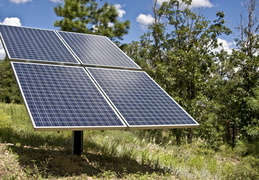
While these represent ideal conditions, it is rare that a home will meet all of them as it sits. Fortunately, there are solutions to such problems, with the most comprehensive one being a ground mount. With a ground mount, a small structure is specially built and secured it to the ground, with the solar panels mounted on it. This is an especially good fix if you have problems with your orientation and roof angle. If the problem is shading or obstructions, that can be fixed simply be cutting down or trimming trees in the way.

Other Challenges

Independent of these major variables, other issues can come into play when determining if solar panels will be a good fit for your home. You have to worry about geography and weather, your energy needs, and the insurance costs of adding solar power to your home.

While these challenges exist, as you can see there are generally ways around each of them. Consult with a contractor or other expert, who can help you decide if solar panels are a good fit for your home.

How Much Can I Expect To Save On Energy If I Have A Solar System? A Question From Fircrest

Monday, September 12th, 2011

Everyone in Fircrest knows about the benefits of solar energy for the environment. It reduces carbon emissions, preserves nonrenewable natural resources, reduces dependence on oil, etc. That is all well and good, but in tight economic times the question always comes down to one thing: how much will you save. People want to know how much going solar can really save them on costs, and if you are reading this, then you are probably wondering the same thing, and with good reason.

Savings Are Variable

Somewhat disappointingly, that’s the answer. There a number of factors to consider in the cost of using solar energy and the subsequent savings, and after considering all of them you may decide solar isn’t right for you. There is no one right answer, but below you can see some guidelines which ought to give you a better idea:

  • Energy costs for an average American household are estimated at about $195 per month, and rising at a rate of about 3.75% each year.
  • The cost of installing a solar panel system is between $8 and $12 per watt (or $8,000 to $12,000 per kilowatt).
  • If your family uses 7 kilowatts of electricity per month, a solar panel system to offset 100% of your energy use will cost about $63,000. You can opt to get a less robust system to offset, say, 50% of current usage, however, for a lower cost. This is not set in stone either. Costs fluctuate depending on where you live and current component prices.
  • Despite the high initial cost, many solar systems are under warranty for 25 years, meaning you can expect them to last at least that long.
  • Depending on the utility price structure in your area, using solar for 50% of your household energy consumption may reduce costs by as much as 60%. Over 25 years, assuming the steady rate increase of 3.75%, your savings can be upwards of $60,000.

Keep in mind that these are only rough estimates. Research utility costs in your area and get estimates before installing. Solar energy calculator utilities are available online. You may find that there is a definite savings with solar, or that you can use a smaller system to offset a portion of your energy use. Or, you may even find that solar energy is not the right option for you. The important thing is to do your homework and choose the home energy solution that is best for you and your family.

How Long Does It Take To Install A Solar Power System In A Home?

Monday, May 30th, 2011

As with any major home improvement project, the process of installing solar panels takes a good amount of time. However, most of that time is spent on research, planning, and purchasing leading up to the actual installation. This is important to keep in mind, as investing in solar energy is nothing to rush into, and there is a great deal to be considered first.

Once all this preparation is done, the actual installation is usually brief, depending on how robust your system will be and any additional components needed. Some “extras” that may cause installation to take a little longer may include:

  • System Size and Capacity – Obviously, the time it takes to install a system will vary depending on how many panels need to be installed. Even so, most home systems will use few enough panels that the time difference is not substantial.
  • Ground Mounting – A ground mount is sometimes necessary when there isn’t a good place to install panels on the house itself. This can be due to roof orientation, less than ideal angles, or nearby obstructions. The additional variables and construction of a ground mount may take a few extra days.
  • Backup Systems – For homeowners who opt to have batteries and/or a generator installed as backup, installation will take a bit longer due to the added complexity. Backup systems require additional components and wiring, which takes some extra time.
  • Weather - Often an overlooked variable, the weather is important as installing solar panels involves working outside and at inclined levels. Bad weather can put workers in danger, so the work may be necessarily delayed.

For most simple home systems, installation will take only a few days. Even with more complex systems that incorporate some of the additional elements mentioned above, installation time should not be affected by more than a day or two. As long as the process goes according to plan and the weather holds, you could expect to have your system up and running within a week. For many, that timeframe is even less. Also, since the work is being done outside, you generally will not be disturbed, aside from some sounds of movement on the roof.

Although installation is a big part of the process of switching to solar, the time it takes is not significant when compared to the preparations that should be done beforehand. Installation should be a brief, albeit exciting, culmination of a longer planning process.

How Do Solar Cells Work?

Friday, May 27th, 2011

Rising energy costs and concerns over depleted resources have many people seeking out alternative energy sources for their homes. One popular solution is solar cells, which harness clean energy from the radiation of the sun to use as electricity. This technology is not terribly new, of course, having been used in calculators for years. A house is rather different from a calculator, though, so the prospect of using solar cells as a source of electricity lends itself to some questions, especially “how does it work?”

How it Works

As you might imagine, there is some complex science behind how cells really work. Rather than get down to the nitty gritty physics of it all, a brief overview should do. Essentially, the radiation from the sun is a tremendous energy source, emitting up to 1000 watts of energy per square meter of Earth in a single day.

The materials in solar cells make them photovoltaic (PV), meaning they are able to convert light to energy. When light strikes the PV cell, its energy is passed along to a semiconductor, thereby generating a current. There’s a good deal more complexity involved in the process but essentially that’s it.

Making It Work for You

There are a number of issues to consider and obstacles to overcome in installing solar cells that work properly, such as:

  • Angle and Orientation – Ideally PV cells should be directed south, at an angle that is as close to the latitude of their location as possible. All sources of shade and other obstructions must be removed for the sake of efficiency.
  • Storage and Backup – The sun doesn’t shine all the time, so you will need a backup system in place. Some options include connecting your home to the power grid, using deep cycle batteries to store energy for use later, or installing a backup generator.
  • Current Inversion – The current produced by the photovoltaic process is DC, so in order to be used like “regular” electricity from a wall socket, it needs to be converted to AC. This means installing an inverter as part of the system. Some PV cells come with invertors built in.

Installing a solar system can be a clean and budget-friendly idea, but it can also be somewhat complicated. Proper materials and installation are vital to proper functioning, so consult with a professional if you are in doubt.