
Archive for the ‘Air Conditioning’ Category

AC Problems You Need A Professional to Fix in Puget Sound

Monday, April 16th, 2012

In a hot climate, it’s great to be cool.  Air conditioning in Puget Sound makes life possible for some people.  It lets us sleep and helps us be our best through the hottest days.

Air conditioning is a cool blanket that wraps around us like a mother’s arm around a little baby.  It’s such a part of our lives that it’s easy to forget that, like a baby, our own air conditioners must be well fed and maintained.

Some quick fixes are easy for a home owner, but other air conditioning repairs are complicated, and require a professionally certified HVAC company like Sound Heating to accomplish.

Doing the Basics

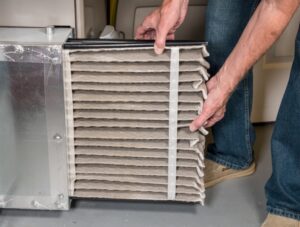
For window mounts or the big units on the side of the house, regular cleanings and a filter change should be a part of every season.  Even for the most bumbling of hands, it’s not hard to remove the cover and replace the panel of webbing that catches lint and other particles out of your conditioned air.

Some warm water and a good shot of compressed air gently on the exposed fins will help to increase the longevity of the unit.  Be careful not to put pressure on the fragile fins and coils or use hot water that could cause corrosion.

Make sure the drain is clear, always cover the unit or store it away when more naturally cool temperatures take over and you’ve got conditioned air and relative peace of mind in the years ahead.

Big Problems

Without the regular service, however, an air conditioner begins to work much harder to produce the same amount (or less) of cool joy and parts begin to break down.  With total neglect, the unit itself may need replacement much sooner than was promised when you paid for it. These are repairs that could be avoided and require a professional to make.

The key ingredient to cooling is a chemical called a refrigerant (most often Freon) that is capable of transforming rapidly from gas to liquid and back again at low temperatures. This runs through two intricate tubes, a compressor, and a critical expansion valve that controls the process.  It is a delicate and complicated process that calls for expertise and the right tools, especially since the refrigerant is considered hazardous and requires special handling.

When the air gets stuffy, it could be that the fan is the problem.  Belts could be worn, loose or broken.  The motor may be low on oil and is stained to the breaking point.

If mysterious signs of water or mold are showing up on the inside of the house near the unit, there could be a problem with the condensate that is released with the heat when air is cooled.  This could be a simple or complicated fix, but should be checked out professionally to ensure all is well.

With love and care, an air conditioner should provide us with a decade or two of wonderful sleep and cool times.  Schedule regular service with Sound Heating to increase the comfort.

Why Are Clean Filters So Important to AC Efficiency?

Tuesday, February 28th, 2012

Air conditioners cost a lot of money to operate in Seattle – even more when they don’t work at 100% efficiency. So, it is important to perform the various regular air conditioning maintenance tasks that ensure the system uses as little electricity as possible. The first thing on your list (and the easiest) is cleaning those filters.

Keeping Filters Clean

The Department of Energy’s Energy Savers website states that you can reduce your air conditioner’s energy consumption by as much as 15% simply by keeping the air filters clean. Why do they matter so much? Consider the nature of a filter.

The filter on your AC unit is designed to capture any dust, debris and sediment in the air supply. If that dust and sediment was allowed in, not only would it gum up the mechanical workings of the device, it would get into your ductwork and reduce the air quality of your home. So, filters are used to capture such things. However, when a filter gets clogged, the system must work harder to draw the air in. As it works harder, the motor turns faster and more electricity is used.

It takes very little to clog the filter of an AC unit, especially if it is running 24 hours a day for two or three months out of the year. So, it’s best to check your filters once every 30 days regardless of what type of filter you are using.

Which Filters to Check

The main filter on your AC unit should be checked along with any air handler filters and any air cleaner filters you have installed in your system. Another thing to consider is the condition of your home and the area around your outdoor condenser. If you have pets, lots of plants or your condenser is located in a dusty area, you may need to check and change those filters even more often.

Most filters are located along the return length of the ductwork – sometimes in ceiling ducts and walls, though they may also be located in your furnace’s air handler or inside the air conditioning unit. If you have window units or mini splits, the filters are frequently in the unit.

Clean air filters are important for your health, your wallet and the longevity of your AC system. Stay on top of them and you will save money in more ways than you might expect.  Please contact Sound Heating if you have any questions.

Kirkland Air Conditioning Tips: How to Clean Your Outdoor HVAC Unit

Friday, February 3rd, 2012

That big metal box in your backyard or on the side next to your Kirkland home plays a vital role in air conditioning your home and keeping you comfortable. That box is called the outdoor condensing unit, the key component in your home’s central air conditioning system. The condensing unit houses the compressor, which converts gas into fluid before sending it to the condenser coil, where it is cooled and sent to an indoor evaporator coil.

What you need to know is that the entire outdoor operation runs smoothly when the area inside and around the condensing unit is clean and free of debris. In some cases, the outdoor unit will fail to work if there is too much debris or dirt build-up. That can cost you a lot of money in repairs or a total replacement. Keeping the condensing unit clean is not a difficult chore – and here are some steps you can take.

First of all, try and avoid blowing leaves or grass clippings near the unit. And regularly cut down or remove any weeds or grass that may grow up around the base of the unit.

To clean the inside of the unit, first turn off the electrical power to it. Check for an on-off switch on the unit or on a separate box nearby. Remove the grille from the unit and carefully remove the fan in order to gain access to the coil and other moving parts. At this point, you should be able to clean out any debris from inside the unit using your hands. You can also use a vacuum hose to remove debris. A soft brush or cloth rag can be used to other areas of the HVAC unit.

The fins on the coil require a gentler approach as they can be easily bent or damaged. If you notice a bent fin you can straighten it out by using a simple dull knife or a special fin “comb” which you can buy at your local hardware store. While you are in the unit, check the fan belt on the motor to ensure it is not damaged or cracked. You can also add extra oil to lubrication ports on the condensing unit, if any are available.

Use a garden hose to clean the coil and the grilles on the condensing unit. Do not use highly-pressurized water as it may cause some damage to the fins. Once this last task has been completed, reinstall the grille, switch on the condensing unit, and start up your air conditioning. You should notice if your house is cooling down quicker. If not, you may want to do some more cleaning.

If you have any doubts about cleaning your outdoor condensing unit or if you find any damaged parts that may need repair or replacement, call your local qualified heating and cooling (HVAC) contractor and schedule a service call.

Good luck – and stay cool.

When Should You Check Your AC Filters: Some Pointers From Eatonville

Friday, September 9th, 2011

The filters on your air conditioning unit are vital for keeping out the dust and debris that make things like illness, allergies and air quality worse in your Eatonville home. And it’s important that you take personal responsibility for checking those filters. Sure, you have a professional visit your home once a year to check the air conditioning, but you should also check the system yourself on a semi-regular basis for possible filter degradation.

Monthly Checks

So, how often should you check? Think of it this way. There is no such thing as checking too much, but you can easily not check often enough. So, we recommend checking your filter at least once every 4 weeks. It may not always need to be changed during that four week checkup (sometimes it can last 6 weeks or longer), but it’s good to take a peek.

Why is this so important? Because filters that haven’t been checked and changed as needed have a habit of building up excess sediment and debris. Not a problem when it comes to actually working, but a huge problem when it comes to your energy bill. The harder a system has to work to keep you house cool, the more energy it draws and the more you pay to have cool air in your home. And it will break down much faster as a result of overwork and dirty filters.

Changing an AC Filter

If your filter is ready for a swap, here are some quick tips to get the job done:

  • Find Your Filters – If you don’t know where your filters are, ask your contractor on the next visit or look near the return grills by the thermostat.
  • Remove the Filters – Open the latches and pull the old filter out to check it. You should be able to see clearly through a permanent filter and a disposable one should still be white. If this isn’t the case, it’s time for a cleaning/replacement.
  • Clean the Area – Clear the grill and area of any debris and sediment that might make the filter worse after replacement.

Proper filter maintenance only takes five minutes and it will save you money every month you run your AC – not a bad deal for a few minutes’ work.

How to Reduce the Load on Your Central Air Conditioner: A Guide From Renton

Wednesday, September 7th, 2011

Your central air conditioner can handle a lot. It can keep your Renton house cool and comfortable all summer long with only a minimum of maintenance. And if you have a newer, more energy efficient model, you probably are not even paying very much for this luxury. But no matter how good your air conditioning system is, it is always best if you can reduce its cooling load as much as possible.

Cutting down on the amount of work your central air conditioner has to do will save you money both in the short term and in the long term. You will be able to keep your house cool all summer while paying even less than you already do and you will help to extend the life of your system as well.

In general, reducing the cooling load that your air conditioner is responsible for involves keeping your house cooler by some other means. One great option when this is your goal is to have some ceiling fans installed. These help to circulate cool air and also create a breeze that can make it feel cooler even if the actual indoor temperature is the same.

With adequate ceiling fans in place, you will usually be able to turn up the thermostat on your central air conditioner and still be completely comfortable indoors. Turning up the temperature on the thermostat means that your air conditioning system will not have to work so hard because it will not have to get the indoor temperature down so low.

You can also reduce the indoor temperature in your house by blocking the sunlight that comes in and warms up the indoor air. Drawing the blinds, especially in those rooms that receive warmer afternoon sunlight will keep that sun from raising your indoor temperature. This, in turn, means that your air conditioning system will not have to work so hard to get the temperature back down.

You can also help to keep cool air inside and warmer air out by covering any doors and windows you are not likely to use with plastic. Also, check to make sure there are no cracks or drafts anywhere that may be letting in air from the outside or allowing cooler indoor air to escape. All of these things can make it possible for your air conditioner to keep your home cool without working so hard, and that will also mean that you will be paying less each month on your energy bills.

Why Select a Two Stage AC vs. Single Stage Air Conditioner: A Tip From Seatac

Monday, September 5th, 2011

When you are in the market for a new air conditioner in Seatac, one of the decisions you will have to make is whether you want a two stage system or one that only functions in a single stage. Of course, before you can make a decision about this, you need to know what all of this means.

A single stage air conditioning system is probably what you are most familiar with. They have been around for longer and can be found in a wide variety of locations. Single stage air conditioners come on at full capacity when the temperature in your home rises above the preset level on the thermostat. Once they have effectively cooled the house, these types of air conditioners shut off until the temperature works its way back up again.

Two stage air conditioners, on the other hand, can function at either 67% or 100% of capacity depending on exactly how warm it is in your home. What that really means is that if the temperature in your home is only a little above the thermostat’s preset limit, the air conditioning system will come on at 67% and gradually cool the house to keep it right in a comfortable range.

However, if you have not been home for a while and your home has gotten very warm inside, your air conditioner will come on at full power to get the temperature down quickly. What this really means is that your air conditioner will be running more than a single stage air conditioner because it will sometimes not be using all of its power to cool.

The end result of using a two stage air conditioner is that you will receive a relatively continuous flow of cool air throughout your home. A two stage air conditioner will send in a steady but smaller stream of cooled air as opposed to the large blast of cold air you would get from a single stage system.

This results in a more consistent and comfortable environment overall, and it also makes it possible for the air conditioning system to dehumidify your house more effectively. When the air is cooled too quickly, the dehumidification system does not always have time to do its job. But with the longer cooling cycles of the two stage system, there is plenty of time to make sure the right amount of humidity is removed from the air.

If you have more questions about which type of air conditioner is right for you, consult a professional.

Who Invented Air Conditioning? Some History From Tumwater

Friday, September 2nd, 2011

For hundreds of years, people have been trying to figure out how to stay cool in the heat of the summer, even in Tumwater. But it wasn’t until 1902 that the first modern air conditioner was put into service in Brooklyn, NY. Since then, many adjustments and improvements have been made to make air conditioning available and convenient for people to use in their homes and cars. But through it all, the basic principles used in that first air conditioner have remained constant.

The Sackett-Wilhelms Lithographing and Publishing Company

The heat and humidity in New York in the summer isn’t something to be taken lightly, but it posed particular problems for the owner of the Sackett-Wilhelms Lithographing and Publishing Company. The conditions inside his facility were such that the paper used was warping and the dimensions fluctuating, causing the printing to constantly come out misaligned.

To try and solve this problem, he hired the Buffalo Forge Company, which itself had just hired Willis Haviland Carrier, a recent recipient of a Master’s Degree in Engineering from Cornell University. Carrier approached this problem by trying to find a way to cool air by passing it over cold coils in the same way air was heated in those days by passing it over hot coils.

As it turned out, this process worked to reduce both the temperature and the humidity in the area and Carrier’s first air conditioner began running at Sackett-Wilhelms in July of 1902.

The Next Steps

As the potential for this new technology became more and more apparent, demand for Carrier’s device grew in all sectors of the economy. Employers were delighted by the way air conditioners increased the productivity of their workers during the hottest months of the year, and in order to keep up with demand, Carrier eventually founded the Carrier Air Conditioning Company which still exists today.

The coolants used in the earliest air conditioners were generally either highly flammable or toxic, and often both. In order to make air conditioning safer and easier to use, a safer coolant needed to be introduced, which was what drove Thomas Midgley, Jr. to develop Freon in 1928. Freon was initially made up of chlorofluorocarbons (CFCs), but as the disastrous environmental impacts of those chemicals became apparent, usage shifted first to hydrogenated chlorofluorocarbons (HCFCs) and then to the hydrofluorocarbons (HFCs) that are predominantly used today.

If you have any questions about modern air conditioning, contact an air conditioning contractor.

Why Install a Ductless Air Conditioner? A Question From Tukwila

Wednesday, August 31st, 2011

As you explore your options in terms of a new home air conditioning system in Tukwila, you will probably have to decide whether you want a system that uses ducts to get the cooled air around the house or one that is considered ductless. Each type of air conditioning system is appropriate in certain situations, so it is important to understand the benefits of each before you can make a decision.

Duct air conditioning systems are the more traditional type on the market today. They generally consist of an outdoor compressor and condenser unit and an indoor air handler. The outdoor unit passes the cooled air through ducts to the air handler, which then takes over circulating the air through the house and back out to the condenser again.

It makes sense to install this type of air conditioning system if you have a large house or if you have ducts already in place. Duct air conditioners can cool a moderate to large sized house quite effectively and they can also be coupled with zone control systems to give you multiple climate zones within your house.

Ductless air conditioners, as their name suggests, do not rely on a system of air ducts to get cooled air distributed throughout your house. These types of systems use refrigerant lines to transfer coolant from the outdoor compressor to the indoor, wall mounted units. Each of these indoor units can take care of cooling one or two rooms, but in order to cool an entire house with one of these systems, you will need to install multiple indoor units.

However, these multiple indoor units can all be connected to the same outdoor compressor, and they can also be controlled independently. That gives you much greater control over which parts of your house are cooled and how much energy you are using to cool areas that may or may not be occupied.

Ductless air conditioners are generally more energy efficient than ducted ones, but their real advantage comes from the facts that they can be installed even in places where air ducts do not exist or cannot go. If you do not already have ductwork in your house, installing a duct system will add considerably to the price of installing a ducted air conditioning system. In a case like this, a ductless system is much easier and cheaper to install and certainly makes more sense.

The Advantages of an Air Conditioning System: A Guide From Seatac

Monday, August 29th, 2011

Just about everyone in Seatac knows that air conditioning systems keep your indoor environment cool and comfortable during the hot summer months. While this may be enough of a benefit for you, there are also some other benefits to having a central air conditioning system installed in your house as well.

For instance, if you have someone in your household who is more susceptible to extreme temperatures than most people, an air conditioning system can actually help improve their overall health. Babies certainly fall into this category, as they have more difficulty than older children or adults do controlling their body temperature.

Also, many elderly people or people suffering from certain medical conditions, particularly heart conditions, are especially sensitive to the heat. If they are unable to stay cool, it can be very dangerous and damaging to their health, and an air conditioning system helps to guarantee that they will be able to stay cool and comfortable even on the hottest days of the year.

Aside from direct health concerns, air conditioning systems can also help to alleviate the symptoms of colds and allergies. They do this by controlling the level of humidity inside your home. If the air in your house is too moist or too dry, it can exacerbate cold and allergy symptoms, as well as dry out skin and make the indoor environment generally uncomfortable.

Proper humidity control is also important because it helps to ensure that any air filtration or purification system you have in place is able to operate at peak efficiency. Many of these units have a hard time extracting particulate contaminants from the indoor air that circulates through them if that air is too humid or too dry. With a state of the art air conditioning system in place, however, you will not have to worry about whether or not the humidity level in your home is out of balance.

It is also worth noting that a central air conditioning system can be preferable to a window mounted unit because it provides for a more even distribution of cool air throughout the house. Also, when you have a central air conditioning system, the condenser which is the source of most of the noise and vibrations that air conditioners make will be located outside and out of earshot. With window mounted units, on the other hand, there is really no way to block out or diminish the noise.

If you have any questions about how air conditioning help you feel more comfortable, contact your local contractor.

How to Handle an Overloaded AC: A Tip From Auburn

Friday, August 26th, 2011

The last thing you need on a hot summer day in Auburn is for your air conditioner to suddenly cut out. Without the cooling power it provides, your house will get uncomfortable quickly. Fortunately, once you know why this happens, there are several things you can do about it.

Why Air Conditioners Cut Out

The most common reason for air conditioner failure is an overabundance of pressure in the unit. This happens because the coil gets too hot, causing the pressure to rise in the entire device. As the pressure rises past a certain point, an automatic safety shutoff system is engaged. If you can stop the coil from heating up to this point, you can keep your air conditioner running.

How to Keep Them Running

Of course, this is easier said than done. Since your condenser unit with the coil inside is located outside in the heat, it’s only natural for it to get hot during the day – especially an extra hot day when you’re using your air conditioner a lot. You also need to be careful not to put anything over or up against your outdoor condenser unit.

While this may block the sunlight, it will also keep heat in the system and prevent the air conditioner from removing exhaust naturally. So in order to keep your air conditioner as cool as possible, make sure there is nothing up against the vents or impeding air flow in any way. Once you’ve done this, try and find a way to provide shade for you air conditioner without placing objects near the device. Blocking out direct sunlight is the best way to keep your air conditioner cool as long as you can do it without interfering with the system’s natural air flow.

Getting it Back On

If your unit does cut out on you, don’t despair. The best thing to do is to wait about a half hour to give your unit a chance to cool off on its own. Then, spray the coil and other overheated areas with a fine mist of cool water. This should lower the temperature enough that the system can come back on without any further complications.

If the problem persists despite the work you’ve done to keep it cool, you may want to call in a professional to take a look and make sure nothing is broken or worn inside to cause the overloads. Most of the time a little maintenance will take care of the problem, but if not, you’ll want to get repairs done quickly to avoid a full breakdown.