Posts Tagged ‘Heating Maintenance’

Steilacoom Boiler Guide: Basic Maintenance

Friday, January 20th, 2012

The boiler in your Steilacoom home is a sensitive piece of equipment that needs routine maintenance and repairs. Regularly maintaining your boiler is especially important for safety reasons. Many boiler malfunctions and accidents are due to neglecting some of these basic tasks.

Even if you’ve just installed a new boiler, the safety valves and settings should be checked by a professional on a regular basis to prevent a breakdown or hazard. We recommend that you schedule a boiler inspection and cleaning at least once a year.

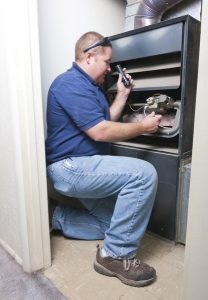
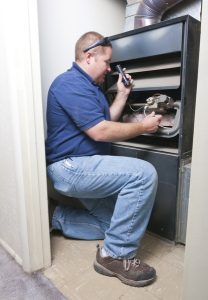
A service technician will measure the pressure, drain and remove sediment buildup, test the efficiency ratings, and make sure your boiler is set at the right temperatures. Regular maintenance can also help you determine whether or not you need a boiler replacement. By keeping track of performance levels, you will be able to tell when it’s time for an upgrade.

Other tasks performed during an annual maintenance visit include cleaning and lubricating all the components, checking for any leaks or clogs, and testing gas boilers for any carbon monoxide intrusion. If you have any gas appliances in your home, you should always have carbon monoxide detectors and test them once a month.

Boiler pressure is something that you can check often on your own. If you aren’t sure how to read the pressure gauge, or if you aren’t sure what the right pressure should be, just call one of our technicians to walk you through this process.

Always call Sound Heating & Air Conditioning Inc. if you have any problems with the boiler in your Steilacoom home. We are here to help and answer any questions you may have.

Graham Heating System Maintenance: Review from Vanessa P

Wednesday, January 11th, 2012

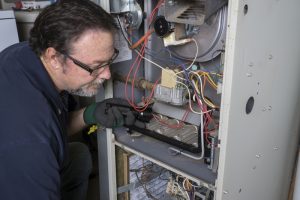
With it working quietly all day in the background, it is easy to forget about your home heating system. Since your heating equipment is relatively complicated, it does require annual maintenance to continue to function safely and at peak efficiency. A maintenance inspection will also detect any potential problems early so you can get them repaired before a complete breakdown.

We try to do our best on every service call, from a major installation to a simple maintenance visit. Our technicians will try to answer all of your questions and perform any job quickly and efficiently. Here is what Vanessa P in Graham, WA wrote to us about her heating maintenance:

We just used Sound Heating and Air to service our furnace and heat pump by recommendation of a friend. Our friend said they were friendly, knowledgeable and reasonably priced. We found all those to be true. Jeremy came to our home and was super nice, answered questions and got the job done. We will definitely be using them for our servicing. I recommend them to anyone that wants a family owned, service oriented heating and air contractor. I will be recommending them to all my clients as well. Nice job!

- Vanessa P. in Graham, WA

We are glad you had such a good experience! We offer 24 hour emergency service, so give us a call day or night if you need any repairs this winter!

How Often Should I Replace My Furnace Filter? A Question from Tukwila

Wednesday, November 30th, 2011

Just like the filter in your air conditioner, replacing your furnace filter is the key to keeping your Tukwila home healthy and comfortable. By keeping a good filter replacement schedule, you will reduce wear and tear to the furnace and keep your home warm, while keeping your family healthy and controlling energy costs all winter.

But when does your furnace filter need to be changed? Well, each system is different, but there are some general guidelines and recommendations to follow that can help you keep it all straight and stay on top of your furnace filter situation.

Conventional Wisdom

The long-standing rule of thumb on furnace filters is to change them every month. This is good practice if you are using older fiberglass filters, but for newer, more efficient filters, you should do it a little differently. These should be inspected and cleaned at least once a month, but you may need to replace them that frequently also.

Sometimes it is a little more complicated than these general guidelines, so it pays to be aware of some factors and conditions in your home that may affect how frequently you need to change your filter.

Things to Consider

As mentioned above, the first thing to consider is the efficiency of the filter. Because new filters are so efficient, when they get dirty or clogged with dust and debris, they actually restrict airflow, making your furnace bog down and work harder. So, it is important to stay on top of a monthly inspection and cleaning schedule with these filters.

Also take into account air quality and sources of allergens both inside and outside your home. If you live in an area with a lot of pollutants in the air, you’ll want to replace your filters often to keep those out of your home. If you own a lot of pets, the dander and hair will wind up in your furnace filter and you may have to replace it more often.

Complicated enough for you? It doesn’t have to be. Simplify the whole process by doing the following: check your filter monthly and be prepared to change it that often, clean high-efficiency filters regularly, replace the filter at least every three months and again at the start of heating season.

If you do those things at a minimum, you will be in pretty good shape.

Sources of Carbon Monoxide: A Guide from Issaquah

Monday, November 14th, 2011

The risks of carbon monoxide have been well documented for years, and everyone in Issaquah knows how dangerous it can be. CO can be fatal at high concentrations, but even in low levels it can be poisonous enough to make you sick.

What you may not know is that there are many sources of carbon monoxide, also known as CO. This poisonous gas is formed by any incomplete combustion process. Since combustion is not 100% efficient, that means carbon monoxide is released any time something burns.

To be more specific, here are some examples of carbon monoxide sources you might encounter around your house:

  • A furnace or chimney can leak exhaust gases, including CO, into the home if it has been improperly sealed or vented. For example, if the chimney has a small crack in the flue that goes unnoticed, CO from the fireplace can be vented back into the house.
  • A furnace supplied by an under-sized gas line will often burn the gas at a sub-optimum temperature. The result is incomplete combustion of the gas, which means a source of CO.
  • Old, dilapidated or poorly maintained heating systems are a big culprit. Often the seals or fittings are loose on these units, causing CO to leak out of them and into your house. Or they may not burn fuel as efficiently as they used to, so carbon monoxide is more readily released.
  • Using machinery, like a propane generator or a gas-powered saw, in a poorly vented garage can be very dangerous. Sometimes people don’t think about this one because the garage is large enough that it seems to be ventilated better than it is.
  • There’s a reason that barbeque grills are labeled for outdoor use only: they release a lot of carbon monoxide. Both charcoal and propane grills should only be used outdoors, and you should avoid the smoke from charcoal in particular as much as possible.
  • Smoking tobacco releases carbon monoxide into the air, along with other potentially dangerous gases.

There are plenty of other sources, as well, but those are some common ones. To protect yourself and your family, make sure any areas where combustion occurs are well-ventilated, keep your HVAC equipment well-maintained and in good repair and invest in a home CO detector. They are inexpensive, and many are combined with a smoke detector, so you only need to buy one unit.

How to Clean the Parts of a Heat Pump? A Question from Yelm

Friday, November 11th, 2011

It is very important to keep your heat pump clean. It improves efficiency, helps performance and prevents malfunctions. Cleaning your heat pump should be part of your Yelm home’s maintenance routine in order to keep the house as comfortable and worry-free as possible.

That is all well and good, but how do you go about cleaning the components of your heat pump. It’s one thing to advise you to clean, clean, clean…but it doesn’t do much good if you do not know how. To correct that, here are some tips to help you clean the different parts of your heat pump.

Caution: before doing any maintenance on your heat pump, including cleaning, be sure to turn off the power to the unit. This is a necessary safety measure.

Filters

  • If you use disposal air filters in your heat pump, skip this part. Just make sure to change them regularly, in accordance with the manufacturer’s instructions.
  • To clean air filters, follow the directions of the manufacturer that were included with the filter. This is also a good time to double check that the filters are installed properly.
  • Clean or replace your filters monthly during heavy use seasons, such as the warm summer months and cold months of late fall and winter.

Coils

  • Remove any debris from the outside of the coils and the surrounding area. Sticks and leaves may have accumulated near the outdoor coils, so just brush them away.
  • Using a soft brush attachment, vacuum the exterior of the coils. Take care not to bend or dent the coils.
  • Using a hose with a spray attachment, flush the coils with water from the inside out. This will remove any stubborn debris. Take care not to spray any electrical components, such as the fan or any nearby wires.
  • While you are inside the unit, vacuum the bottom inside to get rid of any more stray debris.

With that done, put everything back, replace the grille covers and power the heat pump back on. It should run smoothly with a fresh filter and no debris to gum up the works. Clean the coils every few months to keep the heat pump in tip top shape.

Heat Pump Maintenance: Some Pointers from Seatac

Friday, November 4th, 2011

Heating and cooling your Seatac home is a priority. You need your home and family to be comfortable all year round, so you either got or are considering a heat pump. These machines are great because under the right circumstances, they are essentially all-inclusive and incredibly efficient solutions for all your home heating and cooling needs.

Notice the “under the right circumstances” part. A number of things have to be considered when choosing a heat pump, such as the climate and the size of your home. But these are not the only circumstances that influence how well your heat pump works for you. Proper maintenance is a vital component of heat pump ownership, ensuring that you get the best performance out of your heat pump for the longest time possible.

A major part of properly maintaining any machine is to keep it clean. A heat pump is no exception. Dirt and dust can affect the efficiency of your heat pump, as well as speed up corrosion problems. Keep the compressor and coils clean. Check them monthly or so and remove any accumulated dirt. Also, consistently check and change filters according to the manufacturer’s recommendations.

Simple cleaning is an easy and effective first step to heat pump maintenance, but there are some things that you just won’t be able to do on your own. For more intensive maintenance, it is best to call in a professional for an annual inspection.

During a routine maintenance check of your heat pump, a technician will inspect the whole heat pump system for problems. He will clean the compressor and coils, tighten any connections that may have loosened up and change the filters as needed. In addition, a skilled technician will be able to detect any early signs of trouble and make necessary repairs to prevent break downs. These small repairs can prevent big problems later on, thereby preventing some serious discomfort and a possible big expense.

If you are considering a heat pump as a heating and cooling solution for your home, great. If you have already decided on one and had it installed, congratulations on making a smart decision. Now, make another smart decision to protect that investment by keeping your new heat pump properly maintained.

Happy Halloween!

Monday, October 31st, 2011

Happy Halloween! We hope you all have a great time trick or treating, going to a haunted house, or just dressing up! And don’t forget that Halloween means fall is definitely here; don’t wait to get started on your fall maintenance. Now is the time to rake up those leaves, seal up any leaks, and check your heating system. You’ll be glad you did later this winter!

Things You Should Have Inspected: A Guide From Snoqualmie

Wednesday, September 21st, 2011

Life would be great in Snoqualmie if we could just depend on things to work and last without requiring any sort maintenance or upkeep. Unfortunately, that is not the case. As good as modern manufacturing and engineering are, our devices, appliances and machines still need attention in order to stay in peak condition.

The Body Is a Machine

To illustrate this, think about the human body. We put a lot of wear and tear on ourselves, which can lead to minor illnesses, injuries and the like, especially when combined with the effects of aging. One way we attempt to stay ahead of the game is to get an annual physical. Once a year, we pay a visit to our doctor to make sure everything is in tip top shape. He checks everything out, lets us know what’s going on, helps us treat anything that may be acting up and then off we go, ready to go for another year.

And So Is Your Furnace

Likewise, your furnace needs annual attention as well. Although newer electrical furnaces can go up to three years without regular maintenance, gas and oil models should be inspected every year, as should older systems. During an annual inspection, an HVAC professional will:

  • Clean out fuel lines, keeping every flowing freely and efficiently.
  • Check for parts that are wearing out or need to be replaced.
  • Clean and inspect the heating ductwork as well as the vents.

These simple and routine maintenance tasks can extend the life of your furnace by years, keeping your home warm and your heating costs low.

The Best Time for Inspection

The best time to get your furnace inspected is in the late summer to fall months. Although you may still be trying to squeeze every bit of enjoyment from those last warm days, the cold weather comes not far behind, and you will want your furnace ready when that happens. A fall inspection ensures that your furnace will be all set when those temperatures start to drop, so your family won’t have to tolerate any chilly nights.

Annual inspections and maintenance are important for health and longevity, both for you and your furnace. You can even schedule your physical and your furnace inspection around the same time so you don’t forget. Make an appointment for your car while you’re at it, too. That makes three things you won’t have to worry about during those cold winter months.